
Il pulsante “fammi una meraviglia” non esiste
Partiamo togliendo di mezzo la fantasia patinata, con delicatezza ma senza pietà: non c’è un bottone magico che trasforma un prompt in un video finito. Se esiste, a noi non ha mandato l’invito.
Quello che hai appena visto dura 1 minuto e 37 secondi. Per realizzarlo ci sono volute 8 ore e 34 minuti, per un costo di $85.45. Dentro ci sono studio del personaggio, outfit, scene, scatti in studio, voce, lip sync e montaggio: cioè il punto in cui l’ottimismo viene educato alla realtà.
Questa guida mostra tutto il processo: prompt accanto agli shot, tentativi falliti, correzioni e conto finale. Ogni fase ha un modo tutto suo di andare storta. È irritante, certo, ma è anche il lavoro vero.
Ti presentiamo Mila
Mila è un personaggio inventato, non una persona reale. Ha 27 anni, è alta circa 178 cm, ha capelli biondo champagne oltre le spalle con riga centrale, occhi a mandorla grigio-azzurri, viso ovale a cuore, sopracciglia bionde piene e un piccolo neo sotto l’occhio destro.
Volevamo un personaggio intelligente, calmo, attento e contemporaneo. Non il solito stereotipo da influencer lucida e perfetta, perché spesso finisce per avere la stessa faccia levigata di mille altre, solo con luci migliori e meno personalità della hall di un hotel.
La sua storia è essenziale: Mila è una fashion editor del 2030, crea i propri look e li pubblica. I dettagli riconoscibili contano, perché un volto genericamente bello è difficile da controllare scena dopo scena; lentiggini, sopracciglia e neo danno a te, e al modello, prove concrete che sia ancora lei.
Step 1 — il reference sheet
Un ritratto non basta per creare un personaggio. Serve un reference sheet. Abbiamo generato sei viste: ritratto base, rotazione a 30°, profilo a 90°, inquadratura a metà coscia, figura intera e figura intera a 30°.
Il trucco è semplice: appena ottieni un’immagine buona, la reinserisci come riferimento. Poi dai al modello un’istruzione breve per mantenere viso e anatomia invariati. Funziona meglio che allungare i prompt all’infinito, che è il modo più rapido per sembrare un identikit della polizia scritto con l’emicrania.
Abbiamo anche scelto di restare quasi sempre dentro lo stesso engine. Così abbiamo ridotto la deriva dell’identità e capito dove quel modello tende a rompersi, invece di dare la colpa a cinque strumenti diversi come un genitore esausto in viaggio.
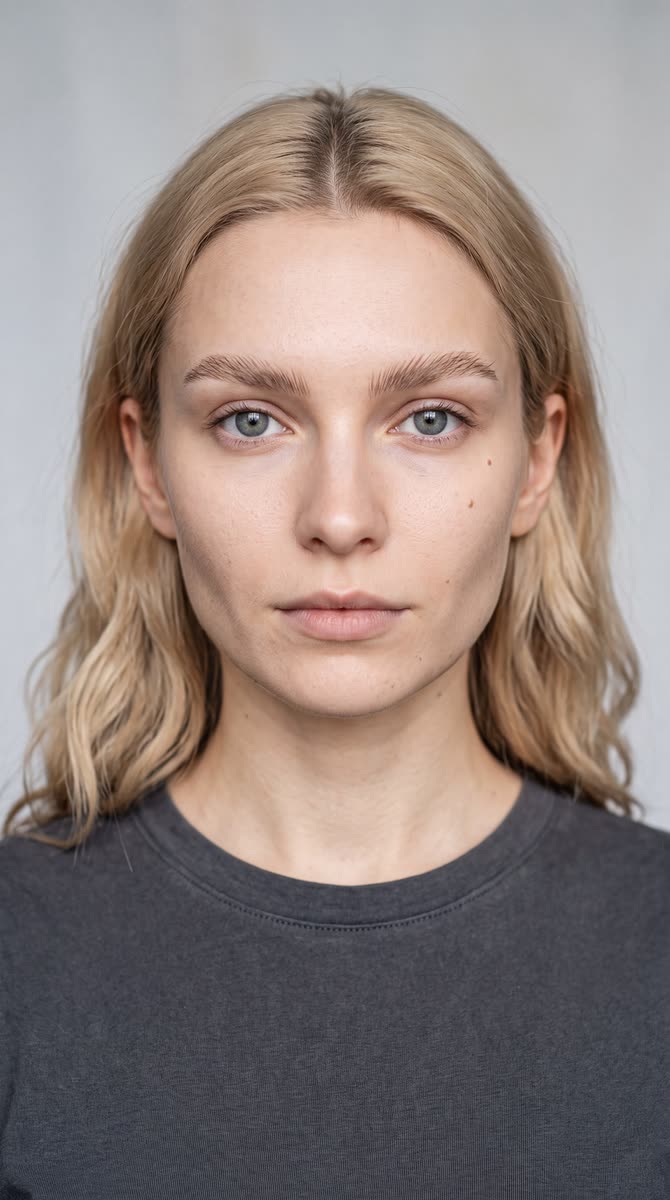
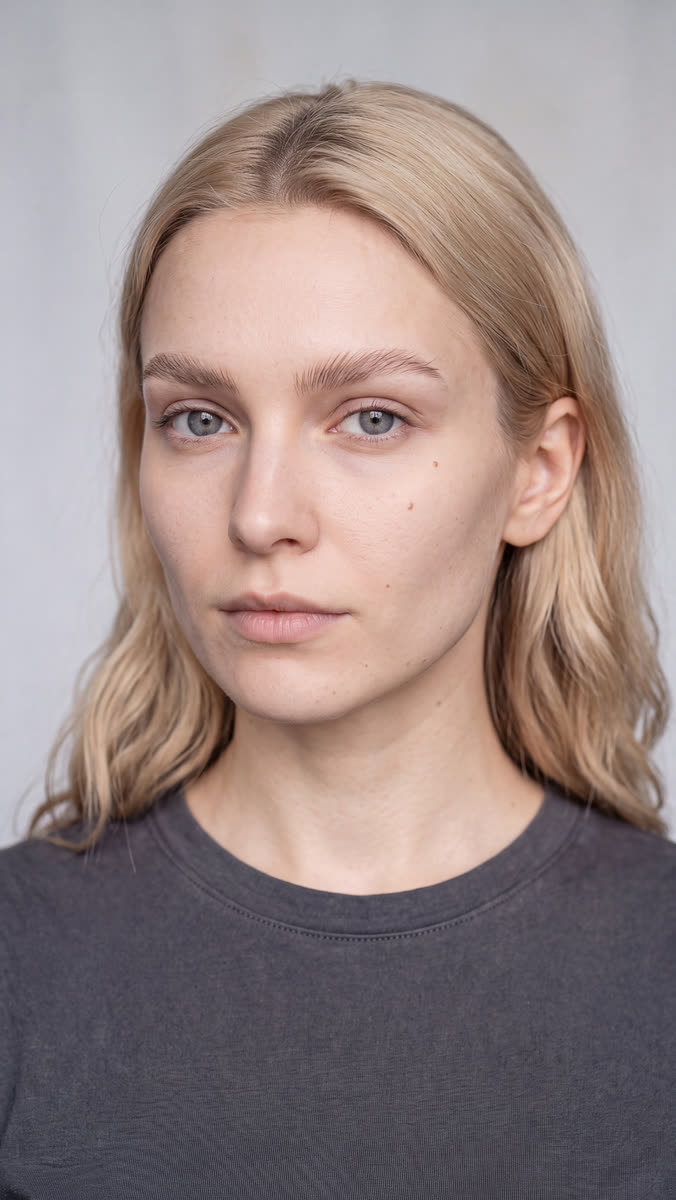
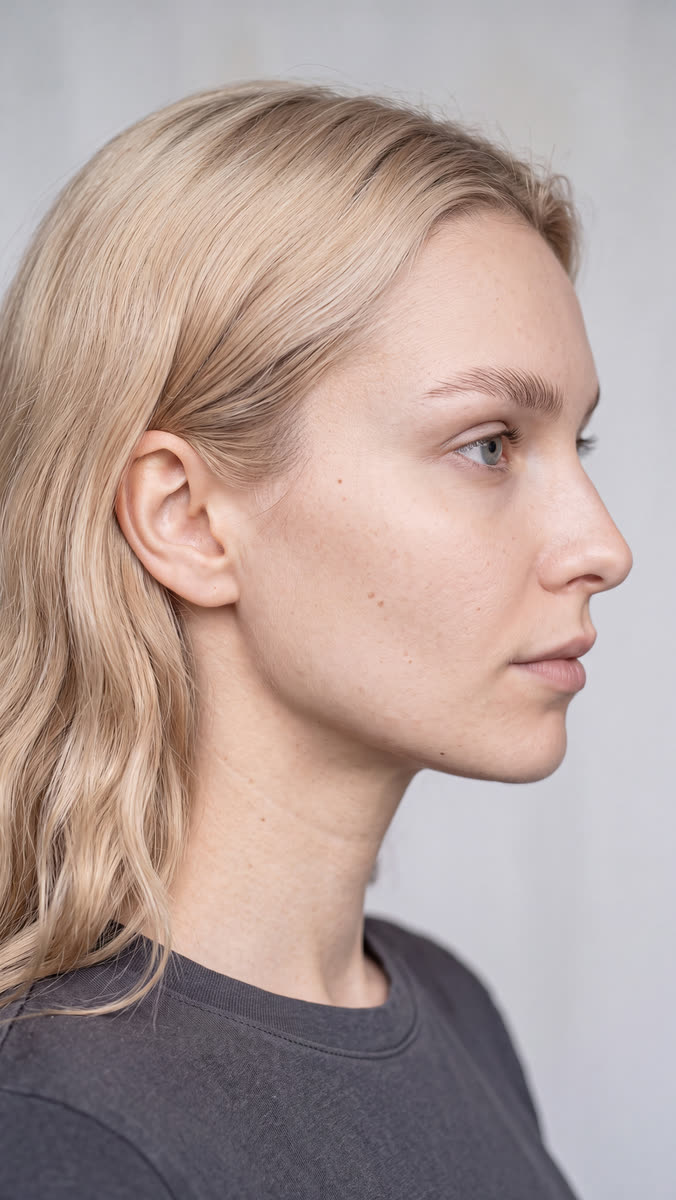
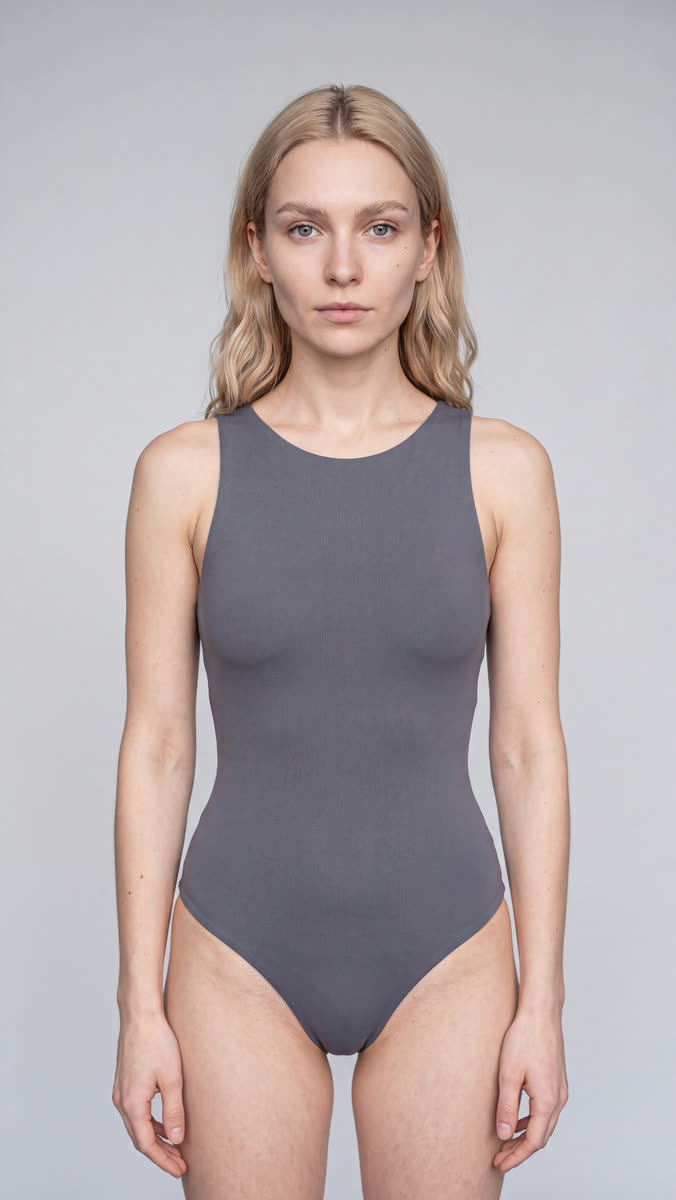
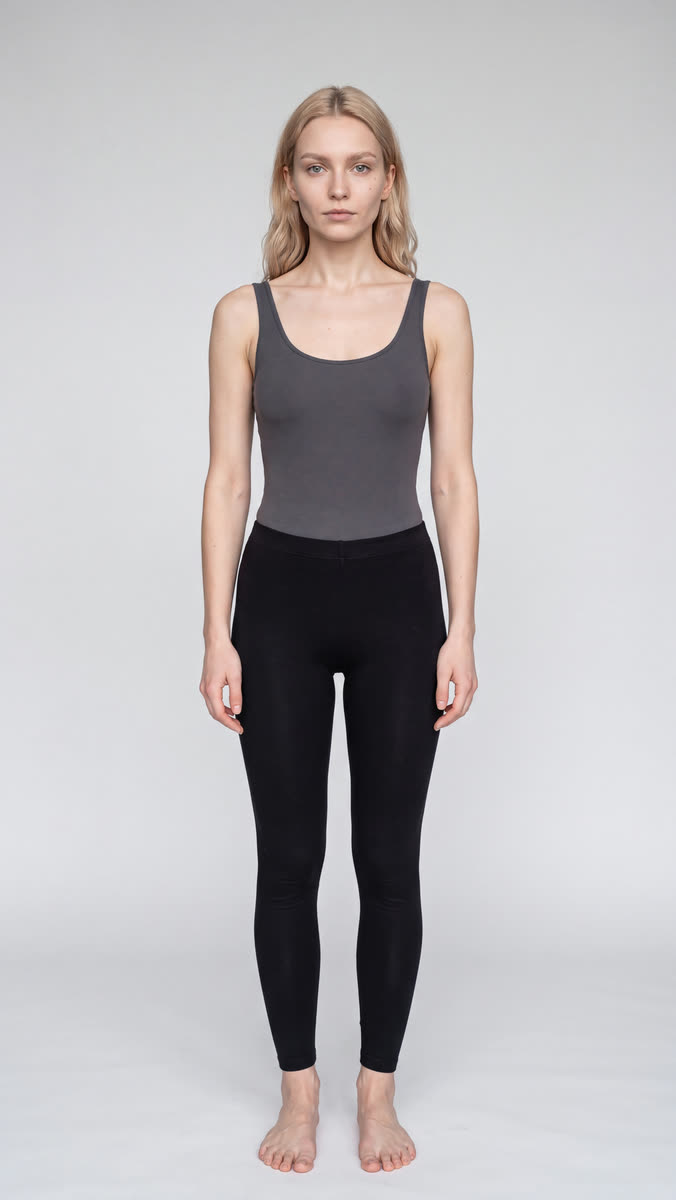
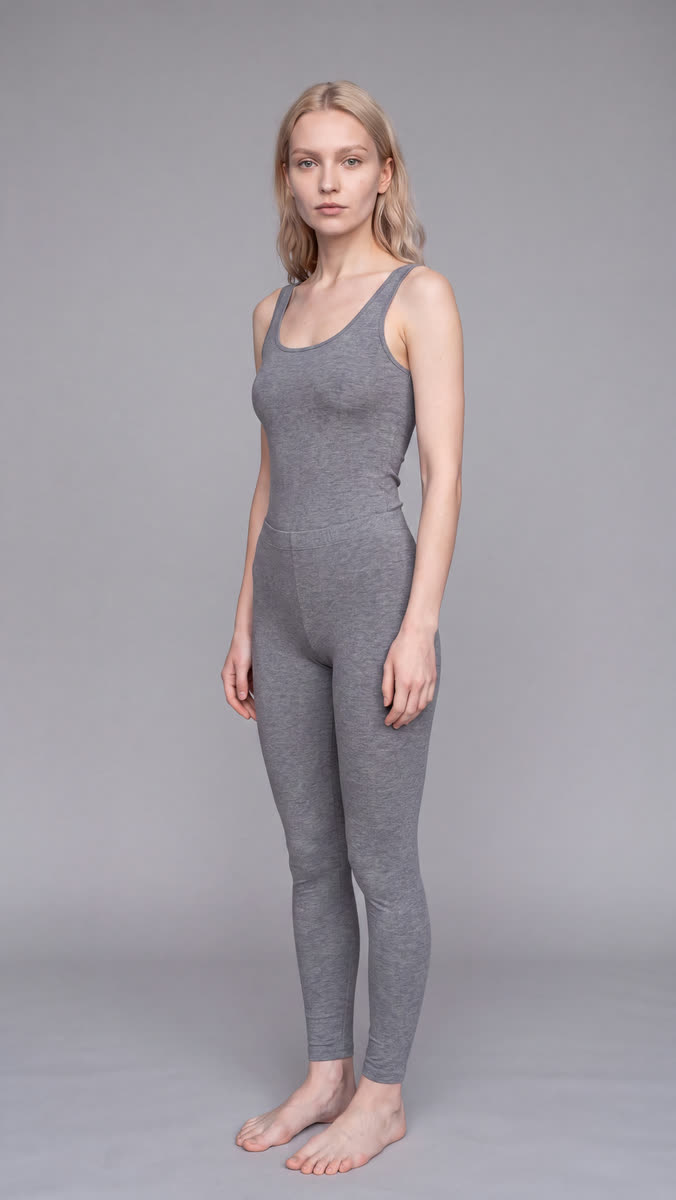
Il reference sheet di Mila: ogni shot successivo nasce da queste immagini.
I cinque prompt dietro al reference sheet
I prompt sono mostrati accanto a ogni shot, con note che spiegano perché esistono. La cosa importante da copiare è lo schema: ripeti sempre la stessa descrizione fisica, indica una sola variabile che cambia e aggiungi via via le immagini approvate come riferimento.
Ogni prompt ripete la stessa descrizione del volto e aggiunge un’unica nuova angolazione. Il ritratto caricato fa il grosso del lavoro; le parole servono solo a dirle dove guardare.
Mostra il prompt
Use the uploaded portrait of Mila as the primary identity reference. Create a RAW photorealistic studio portrait of the same real-looking adult woman. Keep her exact face: fair skin with natural texture, oval heart-shaped face, defined cheekbones, soft refined jawline, large expressive grey-blue almond eyes, straight narrow nose, natural medium lips, distinctive full blonde eyebrows with a soft lifted arch, and a small beauty mark below her right eye. Champagne-blonde hair below the shoulders, centre part, soft waves. Head-and-shoulders view, face turned 30 degrees to her left, eyes looking into the camera, head upright and level. Calm, intelligent, slightly reserved expression, closed lips. Minimal makeup, graphite-grey crew-neck top, no jewellery. Light-grey seamless studio background, soft frontal light, 85mm lens look, realistic colour, unretouched human photo. No illustration, CGI, doll face, glamour filter, text or watermark.
Il profilo laterale netto è l’angolazione più difficile da mantenere coerente: specificare sopracciglia e neo è ciò che tiene insieme l’identità.
Mostra il prompt
Use the uploaded portrait of Mila as the primary identity reference. Create a RAW photorealistic studio image of the same real-looking adult woman. She is tall and slender, with fair skin, natural texture, visible pores, an oval heart-shaped face, defined cheekbones, a soft refined jawline, large expressive grey-blue almond eyes, a straight narrow nose, natural medium lips, and a small beauty mark below her right eye. Her eyebrows are distinctive: light blonde, full, textured, elegant, with a soft lifted arch. Her hair is champagne blonde, below the shoulders, centre part, soft waves. Show a strict 90-degree right-facing side profile, head level, calm neutral expression, closed lips, hair tucked behind the visible ear. Graphite-grey crew-neck top, no jewellery. Light-grey seamless studio background, soft diffused light, true human photo. No cartoon, CGI, doll face, beauty filter, text or watermark.
“Non ridisegnare, reinterpretare, abbellire o sostituire il volto” suona insistente. Ed è proprio questo che impedisce al personaggio di deragliare.
Mostra il prompt
Use the uploaded portrait as the only identity reference. Create a RAW photorealistic studio photo of the exact same woman, framed from head to mid-thigh. Do not redesign, reinterpret, beautify or replace her face. Preserve her identity exactly: same facial geometry, proportions, eyes, eyebrows, nose, lips, jawline, skin tone, hairline, hairstyle and beauty mark. She is a clearly adult woman, tall and slim, with a defined waist and balanced feminine curves. She faces the camera in a relaxed neutral pose, arms slightly away from her torso. She wears a fitted graphite-grey bodysuit. Light-grey seamless background, soft even light, 50mm lens, realistic skin texture, true human photography. Keep the face sharp, detailed and clearly recognizable. No new face, face variation, cartoon, CGI, doll-like skin, distorted anatomy, text or watermark.
Qui entrano DUE riferimenti: il ritratto e l’immagine a metà coscia già approvata. Più angolazioni validate reinserisci, più il personaggio diventa stabile.
Mostra il prompt
Use the uploaded portrait and approved mid-thigh image as identity references. Create a RAW photorealistic full-body studio photo of the exact same woman. Do not redesign or replace her face. Preserve her identity exactly: same facial geometry, proportions, eyes, eyebrows, nose, lips, jawline, skin tone, hairline, hairstyle and beauty mark. She is a clearly adult woman, about 178 cm tall, with a slim elegant figure, defined waist, softly rounded hips, balanced feminine curves and long legs, suitable for dress fittings. She stands front-facing in a relaxed neutral pose, arms naturally at her sides, full body visible from head to bare feet. Fitted graphite-grey bodysuit, matte black leggings. Light-grey studio background, soft even light, 50mm lens, true human photo. No new face, face variation, cartoon, CGI, doll-like skin, distorted anatomy, cropped feet, text or watermark.
A questo punto il prompt può essere breve. Lei ormai esiste: le stai solo prenotando un altro scatto.
Mostra il prompt
Using the uploaded portrait as the face reference, create a photorealistic full-body studio photo of the exact same woman. Tall, slim figure with a defined waist and natural feminine curves. Body turned 30 degrees, head toward the camera, relaxed pose, full body and feet visible. Preserve her face and hair exactly. Simple fitted grey outfit, soft studio light, plain grey background, no cartoon, CGI or distorted anatomy.
I cinque prompt che hanno trasformato un ritratto in un reference sheet completo.
Step 2 — costruire il guardaroba
Dopo aver scelto il look, abbiamo chiesto al modello immagine di isolare ogni capo e accessorio come product shot pulito: abito, borsa, scarpe, occhiali da sole, orecchini e bracciale.
Questo passaggio in più ripaga. Quando un elemento esiste come immagine di riferimento autonoma, puoi reinserirlo in qualsiasi scena e avrà molte più probabilità di restare identico. È così che si costruisce un vero lookbook, senza lo stender che finisce sempre davanti alla porta.
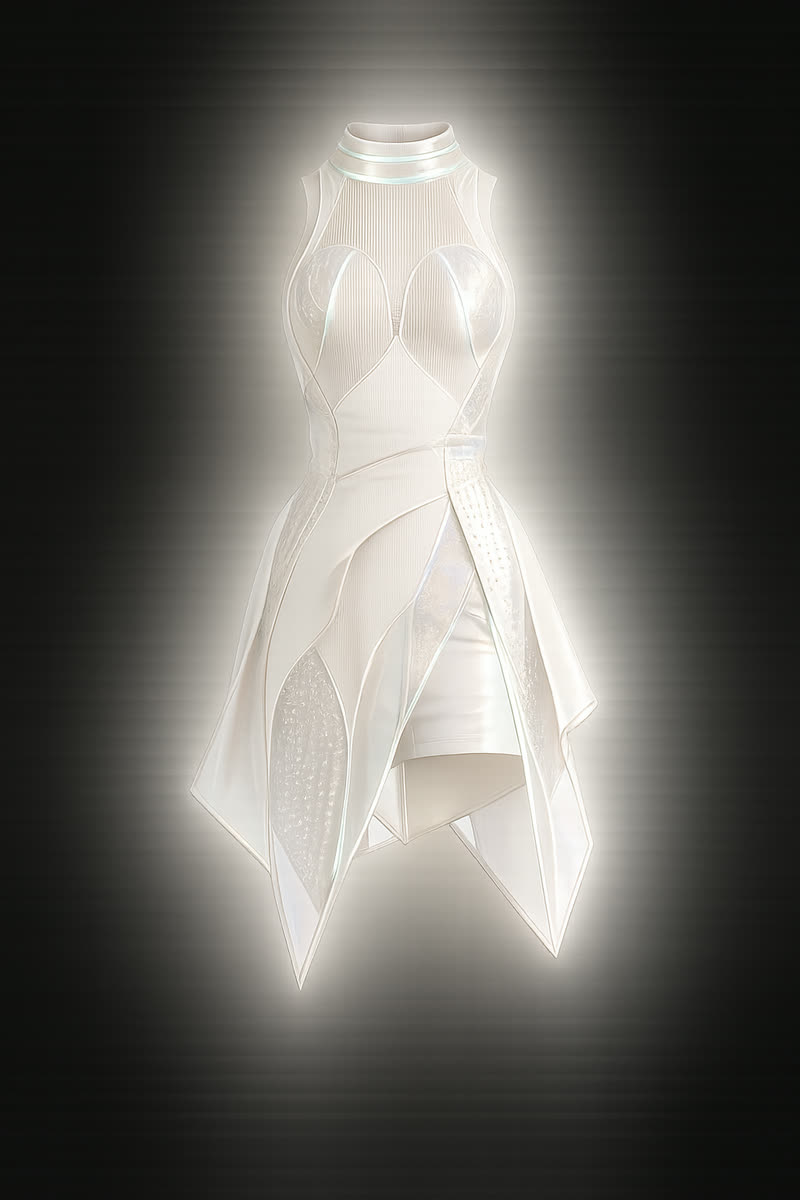
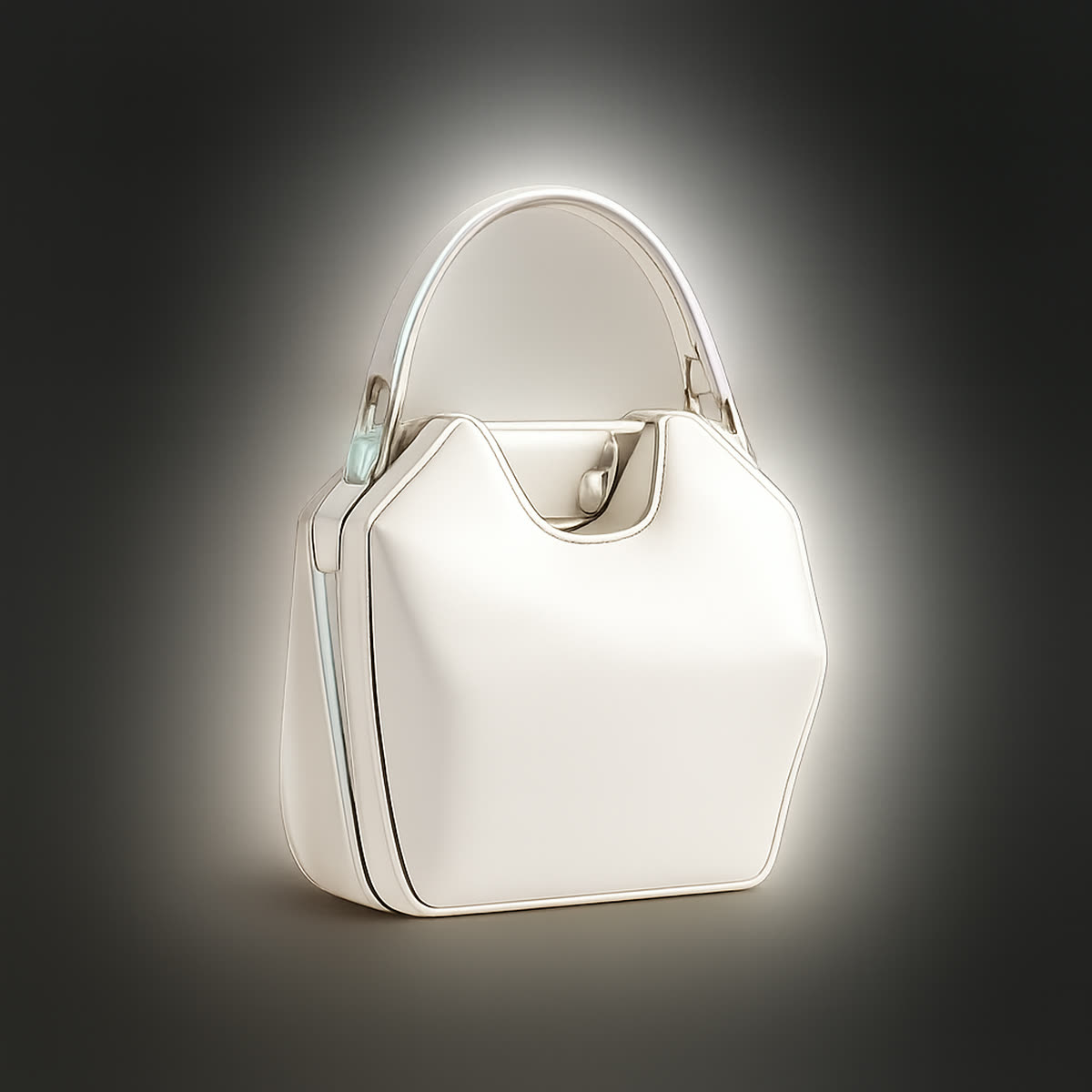
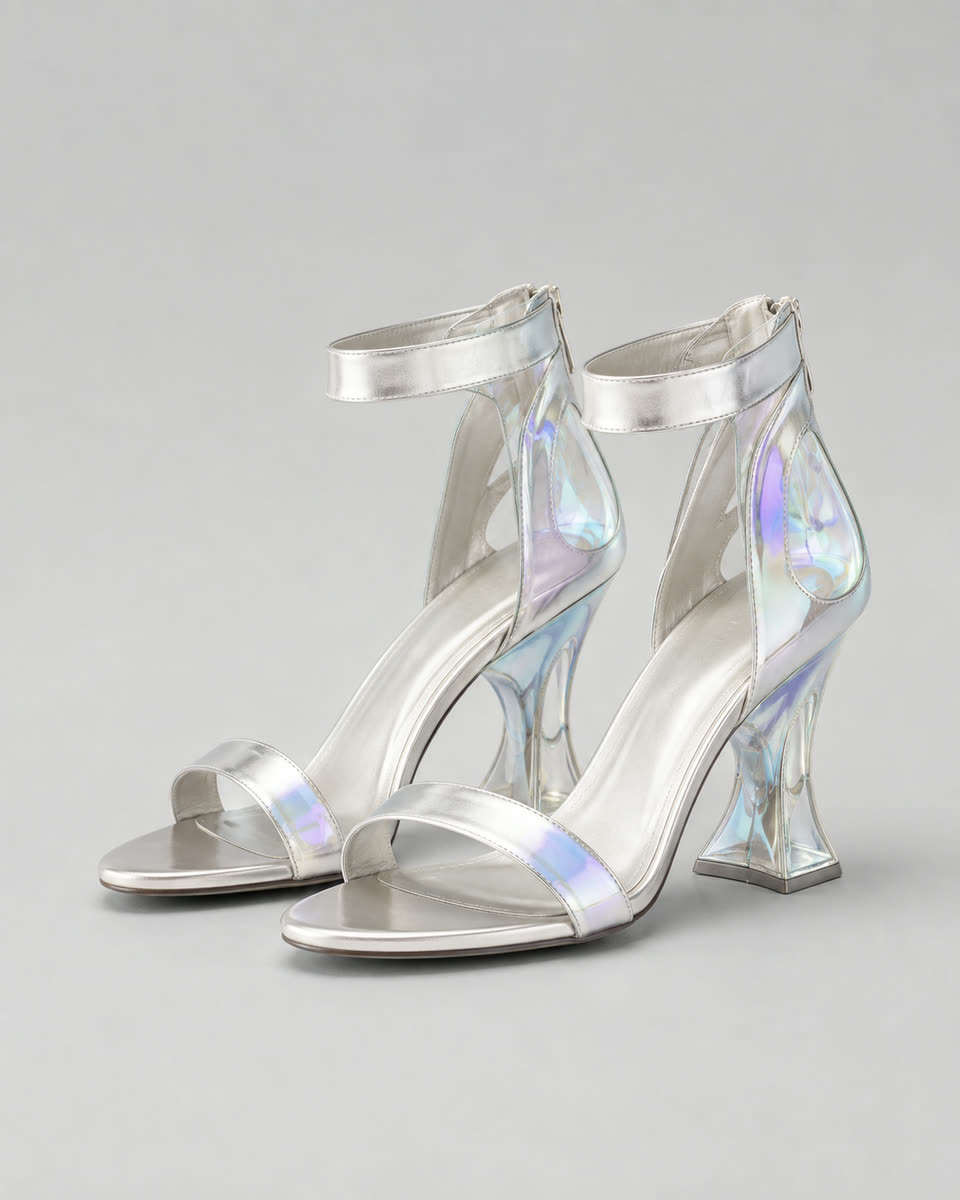
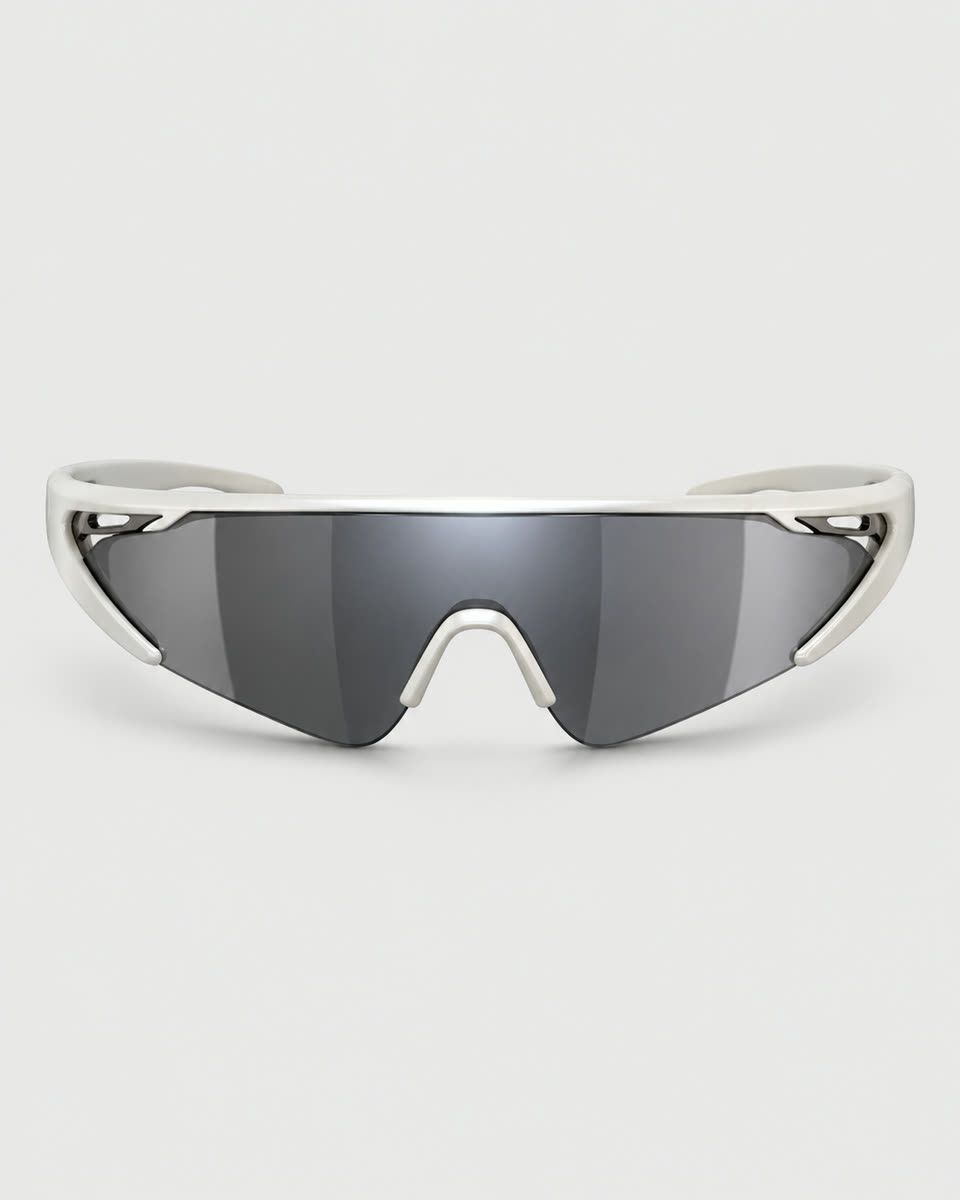
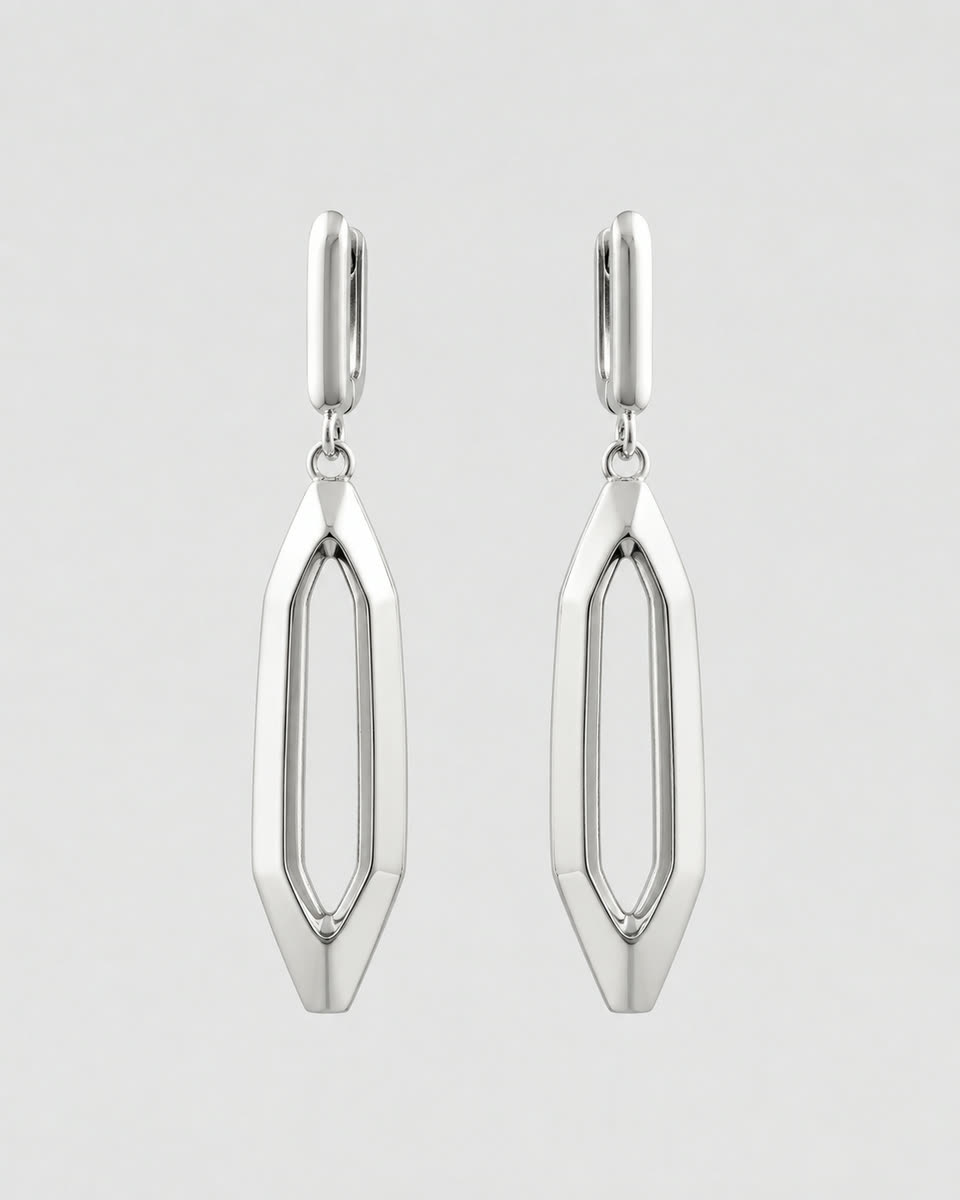
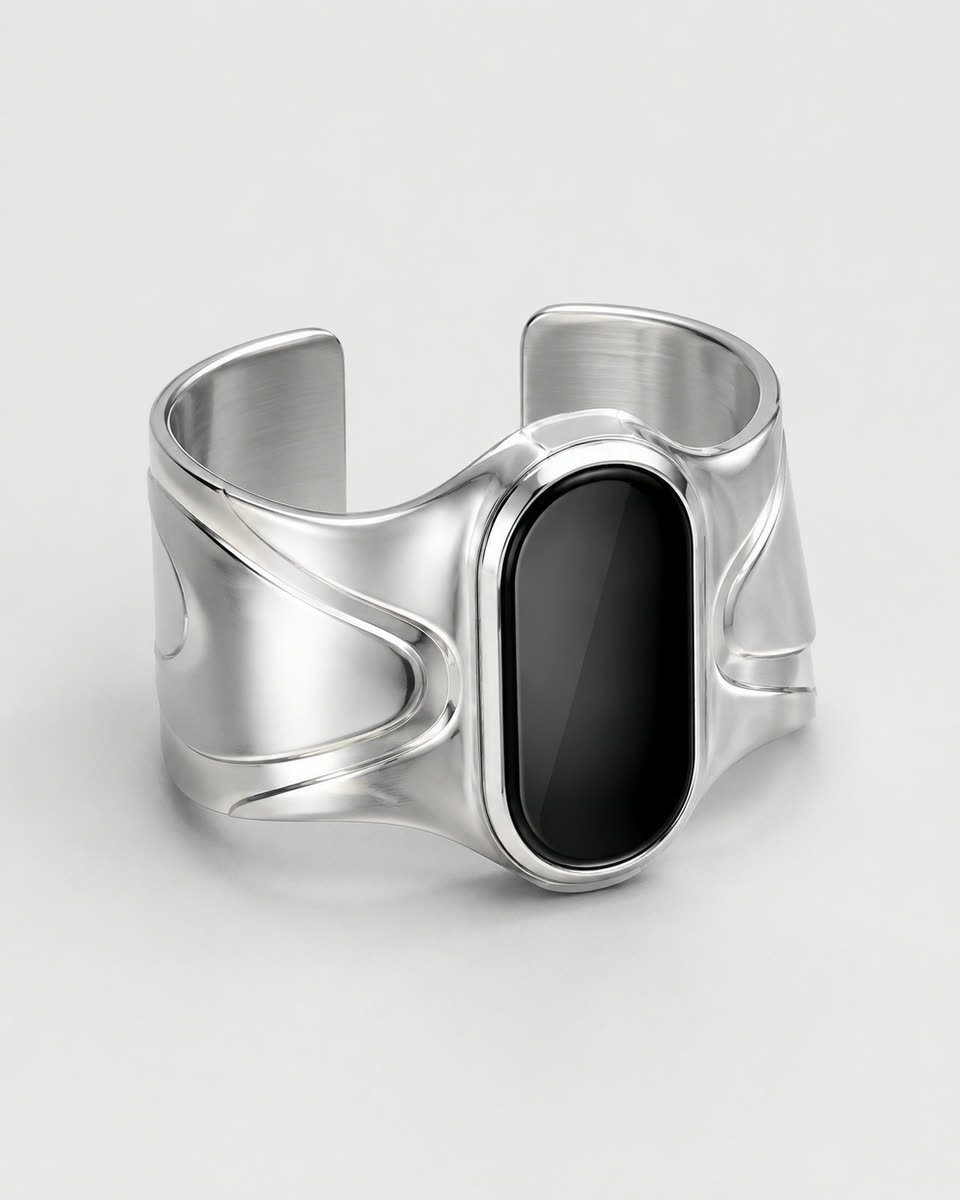
Ogni elemento isolato come product shot, così da poterlo riusare in modo coerente.
Step 3 — farla parlare
Per la scena parlata, lo stack è stato onesto e un po’ rattoppato. Abbiamo generato una clip parlata da un’immagine statica, creato la voce con ElevenLabs e fatto il lip sync con Sync.so.
Voce e lip sync oggi sono fuori da Vynzo. Kling 2.6 può fare lip sync nativamente dentro Vynzo, mentre GPT Image 2 arriverà presto su Vynzo.
Il consiglio pratico conta più della lista dei tool: avvia ogni take di lip sync da una clip sorgente diversa, con gesti ed espressioni differenti. Riutilizzare sempre la stessa clip rende il risultato robotico, come se Mila fosse rimasta intrappolata in un loop gentile da assistenza clienti.
La scena parlata: espressioni e gesti contano più delle parole.
Mostra il prompt
Use the uploaded reference image as the exact identity of the character. Preserve her face, hairstyle, skin tone, proportions, clothing and accessories. Do not redesign or stylize her. Medium close-up, eye-level camera. She looks into the lens and speaks naturally: "[DIALOGUE]". Precise lip sync. Expressions follow the speech: subtle eyebrow movement, realistic blinking, small smiles, brief pauses and natural breathing. She uses restrained hand gestures, small head nods and slight posture shifts. Movements are smooth, relaxed and conversational, never theatrical or repetitive. Keep hands anatomically correct. Negative prompt: identity drift, facial warping, frozen expressions, excessive blinking, random gestures, distorted hands, lip-sync errors, flicker, camera shake, cuts or background changes.
Step 4 — la parte girata in casa
La sequenza domestica è semplice solo sulla carta: Mila presenta un prodotto per clip. Il workflow si ripete ogni volta: generi lo still dal set di riferimenti, lo animi, fai nuovi tentativi e tieni il take migliore.
Ogni clip aveva la stessa istruzione di base: preservare l’identità e mantenere movimenti naturali e discreti. Le note sotto ogni clip sono il punto in cui vivono le lezioni vere, perché spesso la prima versione è quella in cui il modello ti presenta, con molta educazione, un problema nuovo.
Un giro completo è il test più sincero per un personaggio: il modello deve restare se stesso per 360°. Qui è andata bene, ma guarda quanta parte del prompt serve a vietare disastri invece che a chiedere cose.
Mostra il prompt
Use the provided frame as a strict reference. Vertical 9:16, full-body, static camera. Keep the same woman, identity, face, body proportions, hairstyle, dress, bare feet, room, lighting and framing unchanged throughout. She starts already facing the camera, looking directly into the lens with a soft natural smile. From this exact starting pose, she gently holds the sides of the dress with both hands and makes one smooth natural full turn around herself at normal real-time speed, with small realistic steps. The movement should feel elegant and physically natural, with subtle fabric motion and slight hair movement. After the turn, she finishes facing the camera again. No slow motion, no strange grimaces, no exaggerated expressions, no face distortion, no identity drift, no hand glitches, no extra fingers, no foot deformation, no added heels or footwear, no camera movement, no flicker
Il nostro errore preferito: il modello continuava a far passare la borsa DENTRO il braccio, come un fantasma. Dopo molti retry, ne abbiamo usato solo una parte. Il contatto fisico tra mano e oggetto è ancora uno dei punti più instabili dei modelli video.
Mostra il prompt
A woman naturally presents a light-colored leather handbag in a minimalist room. She gently turns her upper body slightly toward the camera, carefully lifts the bag by its handle, and brings it a little closer to the lens to showcase its shape, leather texture, stitching, and hardware. She then subtly adjusts her grip and slowly rotates the handbag to reveal its side profile. Her expression remains calm and confident, with a soft, natural smile. Her hair and clothing move slightly with her body. The camera performs a slow, smooth push-in while keeping the handbag as the main focal point. Realistic premium fashion commercial, soft natural daylight, elegant and controlled movement, high detail, stable composition, smooth natural motion
Chiedere un telefono invisibile e un tremolio controllato da mano libera è ciò che lo fa leggere come un selfie vero. Le aste degli occhiali sparivano durante la rotazione: si risolve solo rilanciando e nominando esattamente quel dettaglio.
Mostra il prompt
Create a photorealistic vertical 9:16 front-camera selfie video from the reference image. Preserve her identity, hair, sunglasses, mint athletic outfit, room, lighting, and framing. The phone is in her hand but never visible, so the camera should have subtle natural handheld motion throughout: tiny shakes, micro-sways, and slight distance shifts. She looks at the screen, slowly turns her head to one side and freezes, holding still for a moment to show the sunglasses. Then she slowly turns her head to the other side and freezes again. After that, she gently brings the camera closer to her face for a close-up of the sunglasses and holds it there briefly. Add natural blinking, breathing, tiny facial movements, and slight hair motion. No speaking, cuts, sudden motion, warped features, or background changes.
First-frame / last-frame. La regola che quasi nessuno dice: la posizione della camera deve combaciare in ENTRAMBI i frame, altrimenti gli oggetti scivolano tra un taglio e l’altro.
Mostra il prompt
Use the first frame as the starting pose and the last frame as the ending pose. In the same bright minimalist room, the woman sits on the sofa and smoothly transitions from reaching toward the open shoebox on the floor to lifting one iridescent heel out of the box and examining it in her hands. At the start, both shoes are clearly inside the shoebox among the tissue paper. During the action, she leans forward, reaches into the box, takes only one shoe by the ankle strap, lifts it up, and supports it with her other hand while looking at it with soft curiosity and a subtle pleased smile. By the end, one shoe is in her hands and the second shoe remains inside the box. Maintain consistent appearance, outfit, room layout, shoebox position, and shoe design. Soft daylight, static camera, realistic motion
Secondo tentativo. Nel primo, la mano ruotava serenamente di 360 gradi: cosa che un polso umano, di solito, non fa.
Mostra il prompt
A cinematic product showcase of a futuristic silver iridescent high-heel sandal being elegantly held in one hand inside a bright, minimalist living room. The camera performs a slow, smooth push-in combined with a subtle left-to-right arc, creating gentle parallax between the shoe and the softly blurred background. The hand naturally rotates the shoe a few degrees to reveal the shimmering holographic panels, metallic finish, sculptural transparent heel, and ankle strap. Soft daylight from the window creates realistic reflections and rainbow highlights that glide across the surface as the camera moves. The background remains calm and out of focus, emphasizing the product. Premium luxury fashion commercial aesthetic, ultra-realistic materials, clean composition, shallow depth of field, stabilized camera, natural motion only, no abrupt movements, no object deformation, no flickering, no warping, no extra fingers or artifacts.
La sequenza in casa: un prodotto per ogni clip.
Il trucco first-frame / last-frame
Per qualsiasi azione con un inizio e una fine chiari, come estrarre una scarpa dalla scatola, dai al modello sia il primo frame sia l’ultimo. Deve sapere da dove parte l’azione e dove deve arrivare.
La regola che molti saltano è la posizione della camera. Primo e ultimo frame devono usare la stessa inquadratura. Se non succede, gli oggetti scivolano e si trasformano, perché il modello prova a muovere camera e oggetto insieme: ed è così che le scarpe diventano possedute.
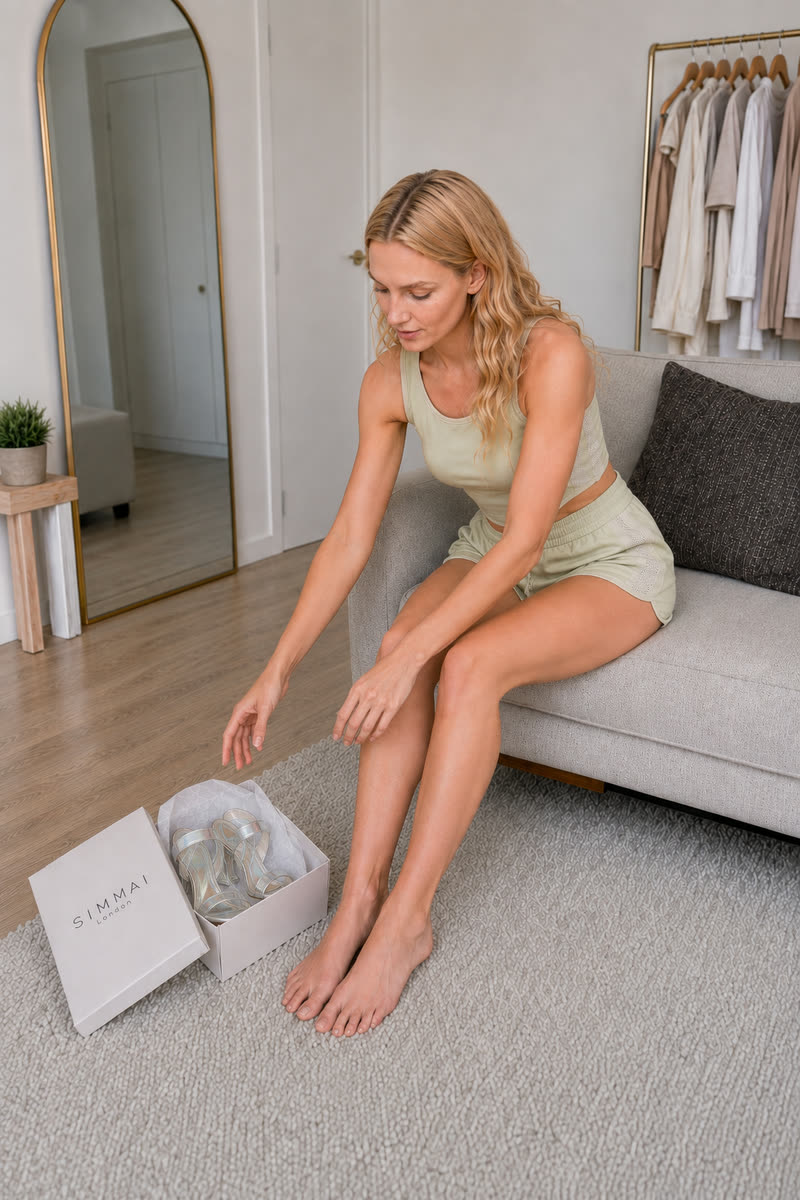
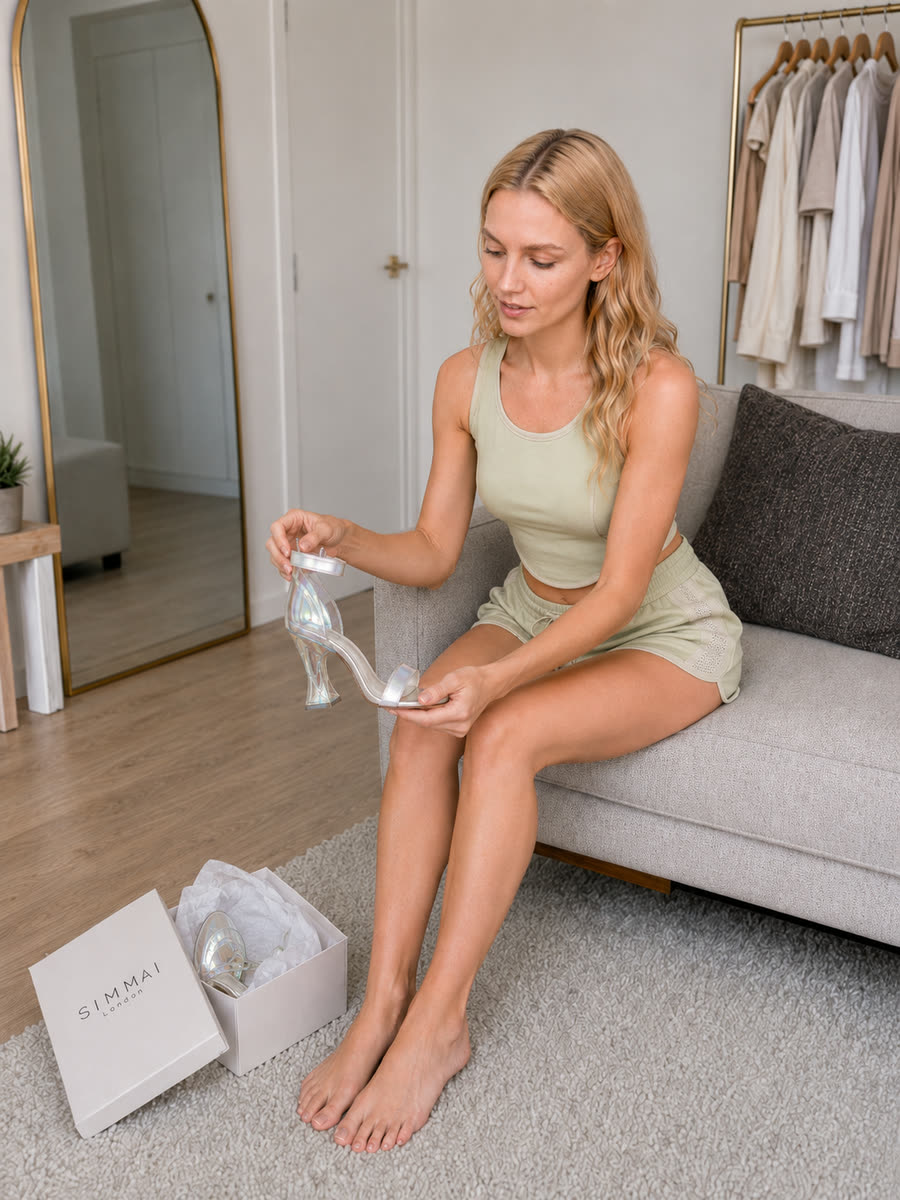
Primo frame e ultimo frame: stessa camera, o gli oggetti iniziano a scivolare.
Step 5 — studio e passerella
Per la sequenza in studio abbiamo vestito Mila con il look completo, prima con e poi senza occhiali da sole, aggiungendo infine il make-up. Qui l’identità richiede ancora più attenzione, perché il trucco cambia un volto. Può coprire piccoli segni e imperfezioni che rendono il personaggio riconoscibile.
Gli scatti backstage del photoshoot sono venuti insieme in fretta e in modo convincente: flash da studio, ventilatore e fotografo appena fuori campo. La scena in passerella è quella che vende tutto il film, perché mette insieme guardaroba, personaggio e movimento in un momento unico e leggibile.
Nano Banana 2 non riusciva sempre a mantenere identici gli accessori. GPT Image 2 ha funzionato meglio per quel compito: carichi l’accessorio e lo inserisci nello shot con un edit. Semplice, non magico. Ormai è un tema ricorrente.
Lo shot che deve reggere tutto il progetto. Ogni cosa viene nominata in modo esplicito — abito, occhiali, orecchini, bracciale, tacchi, borsa — perché tutto ciò che non nomini è qualcosa che il modello potrebbe ridisegnare in silenzio.
Mostra il prompt
The same blonde model from the reference walks confidently down a luxury fashion runway with a professional catwalk stride, maintaining the exact same face, hairstyle, white dress, sunglasses, earrings, bracelet, heels, and cream handbag. She reaches the end of the runway, gracefully stops, and performs three elegant high-fashion poses, subtly shifting her weight, rotating her body, lifting her chin, and naturally presenting the handbag. Camera flashes illuminate her as photographers capture every pose. She executes a smooth runway pivot, then confidently walks back. The dress flows naturally, the handbag swings realistically, and every movement is poised and refined. Cinematic fashion film, glossy runway, soft spotlights, shallow depth of field, ultra-realistic, 9:16, 10 seconds, 4K, 24 fps, preserve the exact appearance from the reference, no outfit or face changes.
La sequenza in studio: look completo, poi passerella.
Still da studio
Gli still da studio sono il look completo assemblato a partire dagli scatti del guardaroba, poi fotografato in un set da studio. È qui che il lavoro sui product shot inizia a pagare l’affitto.
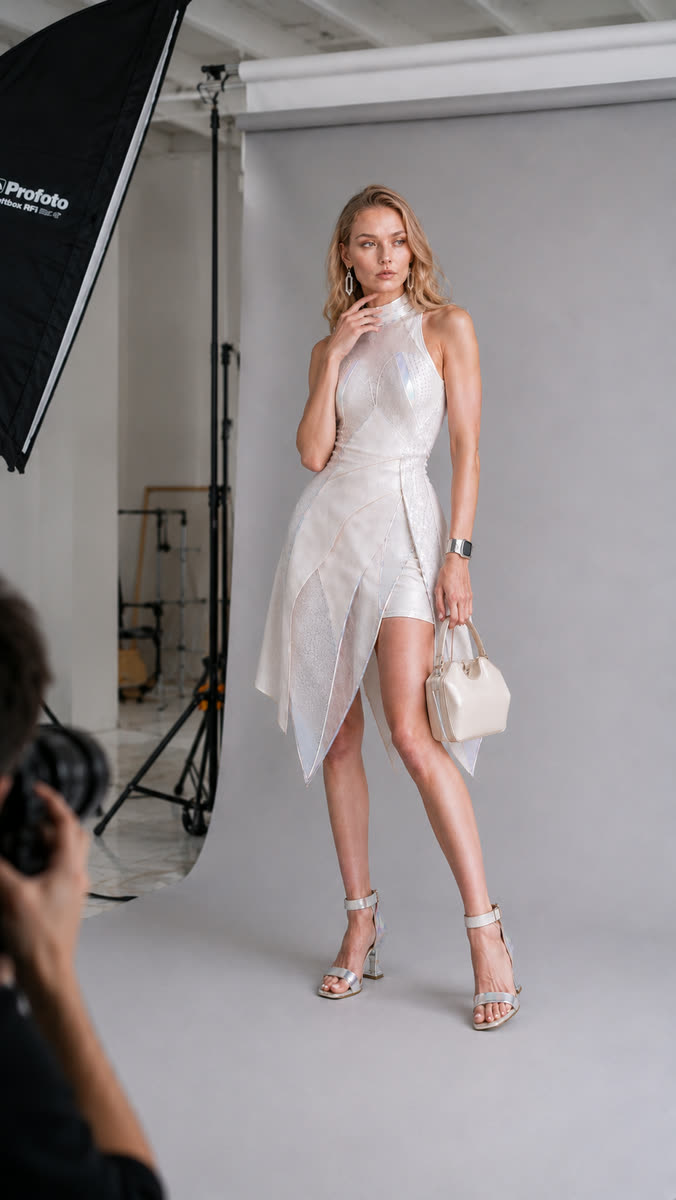
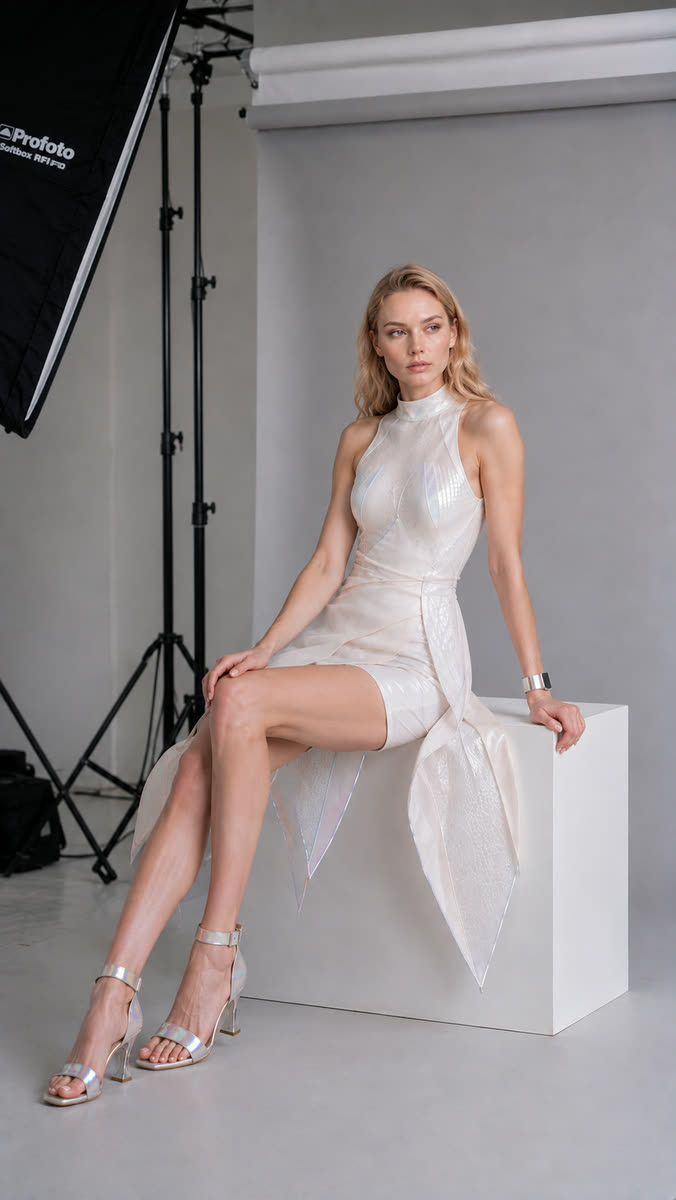
Still da studio: il look completo costruito dagli scatti del guardaroba.
Tutto quello che si è rotto
Questa è la parte che molti articoli evitano, probabilmente perché è meno glamour del video finale e somiglia di più ad ammettere che ti è esplosa la valigia in pubblico. Ma i fallimenti non sono casi limite: sono il lavoro.
Metti in conto i re-roll come un fotografo mette in conto gli scatti. La scoperta più utile è stata che Seedance spesso renderizza in slow motion; un negative prompt non lo ha corretto, quindi abbiamo accelerato quelle clip del 35–40% in montaggio.
La borsa passava attraverso il braccio
- Perché conta
- Il contatto mano-oggetto è oggi uno dei punti più deboli dei modelli video
- Come l’abbiamo risolto davvero
- Molti re-roll; usata solo una parte del take
Le aste degli occhiali sparivano durante la rotazione
- Perché conta
- I piccoli dettagli rigidi tendono a svanire quando la testa si muove
- Come l’abbiamo risolto davvero
- Re-roll nominando esattamente quel dettaglio
La mano ruotava di 360°
- Perché conta
- L’anatomia non viene rispettata se non la controlli
- Come l’abbiamo risolto davvero
- Un re-roll
Tutto usciva in slow motion
- Perché conta
- Seedance allunga un’azione breve per riempire la clip
- Come l’abbiamo risolto davvero
- Il negative prompt NON ha aiutato: accelerare la clip del 35–40% in montaggio
La scena con la matita da trucco
- Perché conta
- Alcune azioni il modello semplicemente non le esegue, qualunque frase tu usi
- Come l’abbiamo risolto davvero
- Tagliata
Un arco innaturale della schiena alla fine
- Perché conta
- Gli ultimi frame sono spesso quelli in cui le pose cedono
- Come l’abbiamo risolto davvero
- Tagliato in montaggio
Gli accessori cambiavano tra uno shot e l’altro
- Perché conta
- I modelli immagine tendono a far derivare i piccoli oggetti
- Come l’abbiamo risolto davvero
- Nano Banana 2 faticava; GPT Image 2 li manteneva meglio: carica l’accessorio e fai l’edit
Prova tutti e quattro i motori sulla tua foto, in un unico studio.
Apri lo studioQuanto è costato
La produzione completa è costata $85.45 e ha richiesto 8 ore e 34 minuti per 1 minuto e 37 secondi di video finito. Il conto è stato: $55.45 per generazione immagini e video, $19 per il lip sync e $11 per la voce.
Quindi, gli AI influencer costano poco? Rispetto a uno shooting reale con modella, fotografo, studio e location, sì. Ma non sono gratis e non sono immediati. E noi non siamo fashion blogger: questa è una dimostrazione di ciò che gli strumenti possono fare oggi. Con più take e un montatore migliore, verrebbe ancora meglio.
| Voce | Cosa comprendeva | Costo |
|---|---|---|
| Seedance 2.0 Pro · Nano Banana 2 · GPT Image 2 | Ogni immagine e ogni clip video | $55.45 |
| Sync.so | Lip sync (usato solo circa il 20% della riserva) | $19.00 |
| ElevenLabs | Voice-over | $11.00 |
| Totale | 1 minuto e 37 secondi di video finito | $85.45 |
| Tempo | Montaggio incluso | 8 h 34 min |
Cosa ti diremmo prima di iniziare
Primo: il pulsante magico non esiste, e probabilmente non esisterà mai. Spiace. I robot hanno imparato luci e tessuti, ma hanno ancora bisogno di una persona con gusto, pazienza e la voglia di rifare lo stesso shot senza prenderla sul personale.
Secondo: senza uno script chiaro e interessante produrrai rumore costoso. Un bel personaggio che attraversa belle inquadrature non è una storia: è uno screensaver con fatture.
Terzo: il personaggio è il prodotto, quindi investi nel reference sheet prima di tutto. Poi prevedi re-roll e montaggio, perché è in edit che si sistemano slow motion, finali brutti e azioni impossibili.